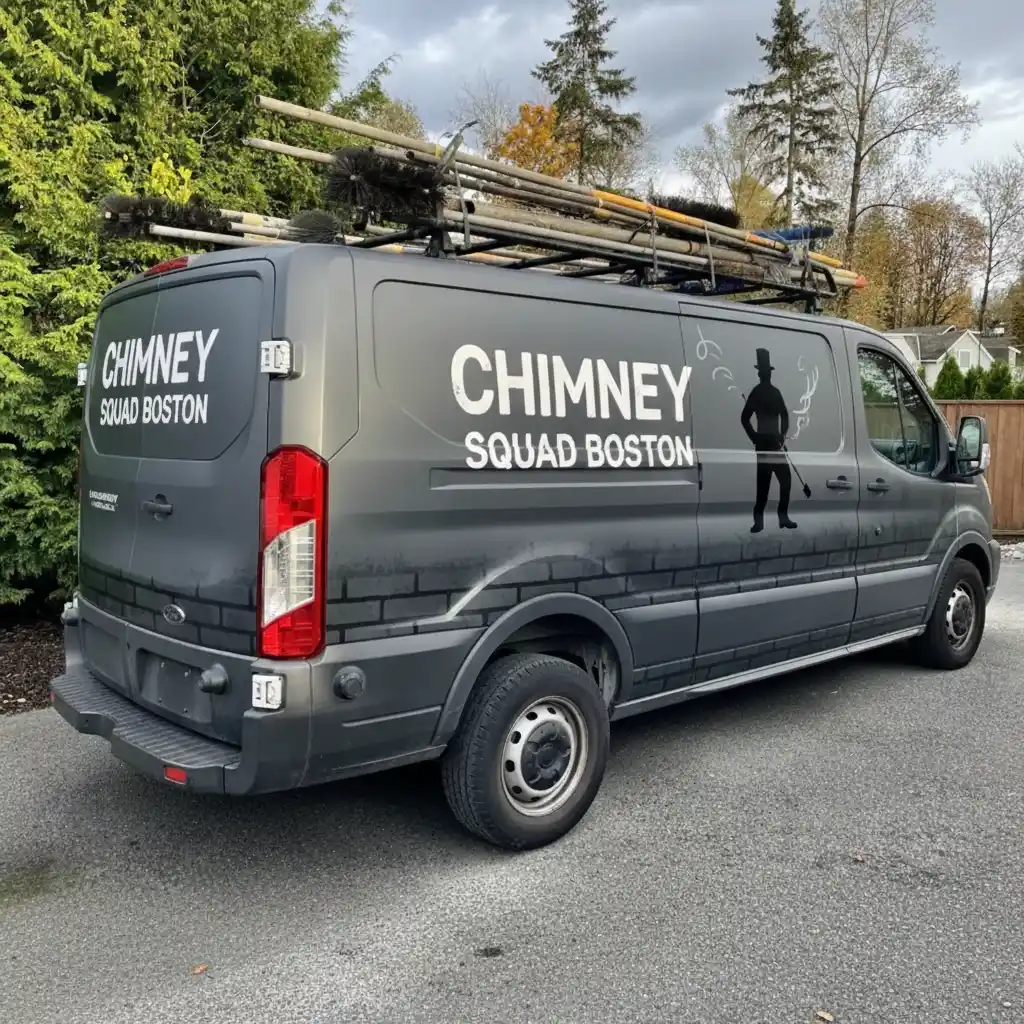
When you switch a Boston fireplace to a gas insert or a wood stove, the flue usually needs a new, correctly-sized liner to vent the new appliance safely. Our relining matches the liner type and diameter to the appliance, installs it insulated and code-compliant, and documents the finished system. The variety of appliance types across Boston homes means liner sizing is never one-size-fits-all, and we spec each to the unit it serves. We confirm the liner actually needs replacing with camera footage before quoting it, so you are not paying for a reline you do not need. Phone 508-379-3353 and we will show you on camera why the liner needs replacing.
- Camera-verified need
- UL-listed stainless liners
- Flexible and cast-in-place
- Insulated and code-compliant
- Appliance-sized for gas or wood
Why You Want Treating This Seriously and Then Some
The liner is the flue within the flue, the smooth inner channel that contains heat and routes gases out. In older chimneys the liner is usually clay tile, and over decades those tiles crack and their joints open. The install ends with a camera check showing the liner seated continuously from the firebox to the cap. That attention to detail is what the photos end up proving.
A Boston stack fights a losing battle with moisture unless someone intervenes. Once moisture is inside the brick, the freeze does the breaking and the brick keeps the damage. Each winter adds to the last, so the damage is cumulative and rarely announces itself until it is serious. A small sealing job today is a fraction of the rebuild it prevents tomorrow.
The liner is the part of the flue that actually makes it safe to burn. We match liner type and diameter to the appliance, install it insulated and code-compliant, and document it. The install ends with a camera check showing the liner seated continuously from the firebox to the cap. It is the kind of detail that separates a real job from a rushed one.
The Process Behind The Process Without the Upsell
A flue's safety comes down to its liner, the inner surface that contains the burn. Relining replaces cracked clay tile that can no longer contain a fire, with a continuous stainless liner. Relining is also what makes appliance conversions safe, since a gas insert or stove needs a correctly sized liner. That care is the whole point of hiring a local crew.
Here is what actually happens between your call and a chimney that is safe to use. We talk through the symptoms, book a convenient time, and load the truck for the whole job rather than a partial visit. Drop cloths go down, the work gets done to standard, and you get photos and an honest summary before we pack up. You get a real plan, not a vague promise to "take a look."
The liner is the barrier that contains the heat of the fire within the flue. We size the liner to the fireplace, stove, or insert, because an oversized one drafts poorly and an undersized one starves the fire. Our install is UL-listed material, insulated to code, and documented with a final camera check you can review. That is just how we run every Boston service call.
The Older Masonry In These Older Homes Without the Hassle in Boston
The older homes around Boston are exactly the ones we work on most. From the brick stacks on older homes to the metal flues on newer construction, each has its own wear pattern. Because we have seen the same failures on the same vintage of homes, we know where to look first. It is the kind of local read an out-of-area crew simply cannot bring.
A liner is the smooth inner channel that makes a flue safe to use. We confirm the need on camera, then install a UL-listed stainless liner sized to the appliance it serves. No upselling a cast-in-place liner when a flexible stainless does the job; the spec matches your chimney, not our margin. That is just how we run every Boston service call.
The Protection In Proper Care Without the Hassle
Safety is the thread running through all of it. Embers off an uncapped flue land on the roof, and combustion gases from a cracked liner reach the structure — both are preventable. Good maintenance is simply what keeps those winter incidents from being your incident. Prevention here is just maintenance done before the season turns dangerous.
Few trades are as easy to game as chimney work, because the customer cannot see what the sweep claims to find. A vague verbal "you really should reline this" with nothing to back it is how this trade earned its skeptics. Our answer to a trade built on guesswork is simple: prove every finding with a picture. Earning the next decade of your calls beats winning one inflated invoice now.
A flue's safety comes down to its liner, the inner surface that contains the burn. We install stainless flexible or cast-in-place based on the chimney, insulated to code either way. We explain why the reline is needed in plain terms and show you the failure on screen. It is a small thing that says everything about the job.
The rest of what we cover
A chimney is a system, so chimney liner installation rarely stands alone — it connects to creosote removal, camera flue scan, tuckpointing, chimney cap installation, chimney crown repair, and our crew handles all of it under one roof. We bring the same service to Cambridge chimney liner installation, Somerville chimney liner installation, Chimney Liner Installation in Brookline, Chimney Liner Installation in Quincy and everywhere else across the area.
If you searched for a chimney sweep near Boston, you have reached a local crew — call 508-379-3353 any time. For background, read Figuring Out Your Boston Chimney's True Sweep Interval on our blog, or head back to our Boston home page to see everything we do.